Monday, January 13, 2020

THE 2019 NOMINATIONS, FIRST IMPRESSIONS

Image result for list of oscar nominations 2020

The nominations for the 2019 Academy Awards were announced this morning, and, as always, they were a mixed bag: the big surprise was that JOKER leads the pack with a whopping eleven nominations, despite the sometimes controversial nature of the film and its only somewhat positive reviews.  For me, the most positive development is that Bong Joon Ho's excellent PARASITE is up for Best Picture, a rarity for a foreign film.  It even garnered five more nominations, including Ho for best director.
I was also glad to see that Antonio Banderas's great performance in Pedro Almodovar's PAIN AND GLORY is up for Best Actor, although I wish that Almodovar's film had gotten more nominations.  (It's also up for Best International Film).  I found it interesting that Robert DeNiro was not nominated for Best Actor for THE IRISHMAN despite the film getting ten nominations.  Is it possible that this had something to do with the digital anti aging technology used on him in the film?  Does the Academy sees this as a bit of a cheat?  Perhaps, but then both Joe Pesci and Al Pacino are both up for Best Supporting Actor and that technology was used on them too.  So who knows.  I was also surprised and disappointed to see that Adam Sandler's gripping lead performance in UNCUT GEMS was unnominated (the film was completely shut out of nominations, which is  disappointing).  Perhaps Sandler has made one too many lazy, dumb comedies over the years to ever be taken seriously as an actor, and while I'm certainly no fan of those films myself, it's still a shame that his good work has been overlooked.  Also shut out was Lulu Wang's well received THE FAREWELL, despite Awkwafina's  good performance in the lead.
Other than the surprising admiration for JOKER, most of the Best Picture nominations were predictably films that garnered positive reviews and other awards.  I was a bit surprised to see  Taika Waititi's only pretty good JOJO RABBIT up, but then, it's usually a safe bet for anti Nazi films to get nominations.  Personally, I found Quentin Tarantino's ONCE UPON A TIME IN HOLLYWOOD and Scorsese's THE IRISHMAN to be overlong and overrated, but given the popularity of those two directors with the Academy, there was almost no way they couldn't have been nominated.

As always, diversity is an issue in the nominations:  as the New York Times points out, "the Academy of Motion Picture Arts and Sciences has mounted an effort to double female and minority membership, in large part by inviting in more film professionals from overseas. But even after four years of the initiative, the organization remains 68 percent male and 84 percent white. "  The big snub is that Greta Gerwig's charming LITTLE WOMEN is up for Best Picture (and got five other nominations) but Gerwig herself is not up for Best Director.   Two of the nominees in the acting categories  are people of color (Banderas and Cynthia Erivo for HARRIET), overlooking fine performances like the aforementioned Awkwafina, Luptiat  Nyong'o in US and the two lead performers in Melina Matsoukas's QUEEN & SLIM.
I've already mentioned my admiration for PARASITE, which I think should win Best Picture, but probably won't. ( It will almost certainly win the Best International Film award. ) And despite it's high number of nominations, I seriously doubt that a film as dark as JOKER could possibly win Best Picture.   Martin Scorsese's THE IRISHMAN probably has a good chance, with its critical acclaim and period piece details.  But I wouldn't rule out Noah Baumbach's excellent MARRIAGE STORY, with its two powerhouse lead performances.  In any event, I was glad to see that none of the Best Picture nominees were as bland and predictable as last year's winner, GREEN BOOK.  Whatever wins this year will be an improvement!

Monday, December 2, 2019

MAD MAX: DID I MISS SOMETHING?

Image result for mad max fury road
Hmmm, even the poster likes Furiosa more than Max


Back in 2015 when the Oscar nominees were announced, I was surprised to see that George Miller's MAD MAX: FURY ROAD racked up 10 nominations (it would go on to win 6, all for technical things like editing).  When I posted about this on this blog, I dismissed the film  as "vastly overrated", and called Tom Hardy's lead role performance somnambulistic.  When SPOTLIGHT  went on to win Best Picture that year, I had no objection, thinking it a far superior and relevant film.
Recently, in the inevitable rush to summarize the last decade, various media outlets (like The AV Club online magazine) have been releasing  their lists of the best films of the decade.  And lo and behold, Fury Road has been topping or placing highly on many of them.  Now, I tend to agree with critical consensus over the ones made by the Academy over the years (I daresay that CITIZEN KANE has held up better than HOW GREEN WAS MY VALLEY!) , yet I really disagree with the critics regarding Fury Road.  While I generally liked the film, the notion that it's better than say, MOONLIGHT or SELMA seems crazy to me.  I could probably come up with one hundred films released in the last decade that I liked more than Fury Road.  Am I too out of  step?  Am I snob who dismisses it as "just" an action film? (Yes,  but that doesn't make me wrong!). Have the nation's film critics all been replaced by twelve year old fan boys, or did I miss something?  In the interest of being open minded, I have decided to watch the film again with as little bias as I can muster. I don't like to think that my opinions are written in stone, maybe there's more to the film than I thought.
First, some words about the Mad Max series in general: the first film was the debut feature of George Miller, an Australian born emergency room doctor who used actual motor related injuries he saw as inspiration for the film!  Starring a then unknown Mel Gibson, made for only around three hundred thousand dollars and shot mostly in semi legal fashion around the Australian outback, it became a worldwide cult hit.  Looked at years later, it holds up pretty well, especially in its opening scenes that sets up Miller's skill with a chase scene, not to mention his willingness to put his cast and  stunt people in some pretty precarious situations.  If the movie descends into standard issue action film cliches in it's later scenes (with post apocalyptic law man Max getting revenge on some evil  bikers after they kill his wife and child), it's still entertaining given its budget. Its success led to an inevitable sequel in 1982, MAD MAX 2: THE ROAD WARRIOR (released in America as just THE ROAD WARRIOR).  In my opinion, this film is the best in the series, as Miller, armed with a bigger budget, created even more impressive action scenes than the first, (the film's climax still stands as one of the best chase scenes ever)  while Gibson had grown to be far more comfortable on camera and used his natural onscreen charisma to good effect.  It would prove to be an even bigger hit than the first film, making an international star out of Gibson (which, looking back, may not have been  a good thing!).  Perhaps most interestingly for the series as a whole, THE ROAD WARRIOR was the first film to really lean into its post apocalyptic setting; in the first film, that setting was mostly a budget issue, and society overall still seemed to be functioning.  But in the second film, the world is a big ugly anarchic desert  with scarce resources full of road gangs willing to kill for those resources.  It was a bleak view of the future, one that Gibson's cynical mercenary character fit right into; he was not unlike the famous Man With No Name that Clint Eastwood played in Sergio Leone's spaghetti westerns of the 1960's.  The third film in the series, MAD MAX: BEYOND THUNDERDOME, released in 1985, toned done that bleak view, and lightened up the main character, perhaps because of Gibson's increasing popularity, or to widen the audience appeal by getting a PG-13 rating.  The result was an almost maddeningly uneven film, with the first half having some of the best scenes in the series, and the second containing some of the worst.  The film opens with Max, alone again, stumbling into a society known as Bartertown, a ramshackle society run on methane and led by Auntie Em (played surprisingly well by Tina Turner).  The film's first half jettisons chase scenes and builds instead to a very exciting and well done man to man battle that finds Max and his towering opponent bouncing around on giant rubber bands in a huge dome.  Unfortunately, the film falls apart as Max encounters a group of annoying children in the desert, and the film ends with a chase scene that merely tries to rehash the climax of the second film with diminishing results.  It even ends with a ridiculous scene of Auntie Em letting Max go after wrecking half her army chasing him!
After the fourth film, director Miller would go on to make other films like 1987's THE WITCHES OF EASTWICK and 1998's BABE:PIG IN THE CITY  but he apparently never stopped thinking about returning to the Mad Max universe.  He tried to gear up production for one as early as 2001, but first the terrorist attacks of 9/11 and then the Iraq war affected the budget and locations, and he would instead make the animated film HAPPY FEET in 2006.  Finally, after years of storyboarding and delays, and the decision to recast the role of Max from the too old Gibson to Tom Hardy, Miller was finally able to start shooting in the African country of Nambia with a small army of crew and cast members, including olympic gymnasts and Cirque du Soleil members for the stunt scenes. After shooting for 120 days,  Miller's wife Margaret Sixel  took on the Herculean, months long task of editing the film's reported 480 hours of footage into a releasable film.  (She would win an Oscar for her troubles). 
Surprisingly, it only opened at #2 at the US box office (behind Pitch Perfect 2, if you can believe it!) and was only a moderate hit (around $150 million in America) considering its budget.  But critics and fan boys embraced it so strongly that it's reputation has swelled in social media, making it the opposite of the far more successful AVATAR, which has seen its reputation diminish over time despite being one of the biggest money making films ever.  Perhaps it plays better on TV and computer screens than the 3D effects heavy AVATAR.
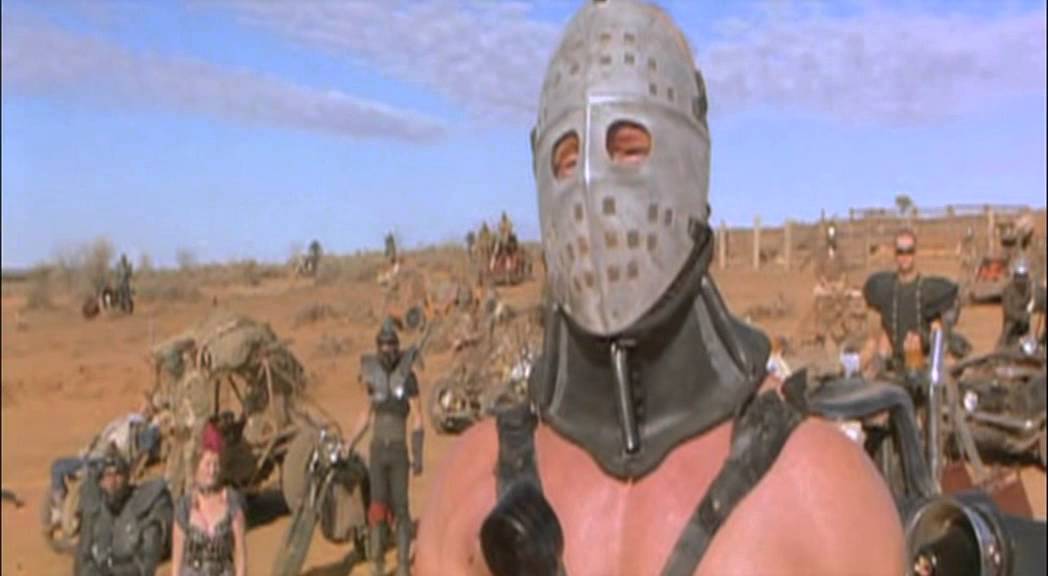

Image result for the road warrior humongous

Clearly there's some overlap


In many ways, Miller seemed to consciously make FURY ROAD as a  throwback to THE ROAD WARRIOR: the toned down violence of the third film is rejected to bring back the harder, R rated action of the second.  Story wise, we once  again, have a raspy voiced, hideously masked villain (the absurdly named Immortan Joe*) who leads a cult like group of bikers.  Again we have cynical wandering outsider Max encounter a society built in the chaos of the desert, focused around on rare resources (gas in the second film, water in the fourth).   And again, we see Max learn to respect and aid a group of renegades against that hideous cult leader.  And, or course, both films end with a smashing, crashing chase that features multiple vehicles and impressive stunts.  The big change in FURY ROAD is the addition of Charlize Theron as Imperator Furiosa, who betrays Joe because of her disgust of his use of women as essentially breeding machines in his twisted little society. .  Theron is definitely the best thing about the film; she's no Wonder Woman with super powers, instead her strength is driven by her sense of righteousness and steely determination.  That determination give her action scenes an extra edge, since we are always aware of what she's fighting for and against, even when she's fighting Max himself.
Theron and her character are so good in this film, that it actually leads to the film's biggest flaw: she's  a better character than Max.  Unlike him, she has to carry off a major betrayal knowing full well that it will put her own life in danger, when she could have just gone along with Joe's corrupt society.  Max, on the other hand, just kinda shows up.  Seriously, he gets taken captive in the first scene and spends much of the first part of the film bound up while the story unfolds around him.   Personally, I found my interest in the film flagging every time the film cut away from Furiosa to catch up with our so called hero.  And even when Max inevitably starts to get involved in the story, much of the time he still seems almost tangential to what's going on, spending more time reacting than being active.  So here's a bold assertion:  Max shouldn't be in this film all.  I think a much better film could have been made with Furiosa being the main character that's just set in the Mad Max universe.  I think this not only because of Max's lack of connection to the plot, but also because of Tom Hardy's performance.  I already called Hardy somnambulistic in this film, and I stand by that statement.  Now, I wouldn't exactly call Mel Gibson's acting in the first three films great, but he was compelling and strong enough to carry the action.  Hardy often seems barely involved with what's going on around him; he grunts, points and looks bored throughout most of the film.  (Honestly, given the huge amount of footage that Miller and his wife had to edit for this film, one has to wonder how  Hardy could have been worse in the outtakes!  Did he burp in every shot?)  The weakness of Hardy is really displayed in a scene that clearly calls back to the second film:  In THE ROAD WARRIOR, late in the film, a bruised and battered Max declares that he will drive the huge tanker truck in the final chase.  It's a big moment for him, in that up to that point he has only shown self interest. but here he finally does the right thing, and Gibson plays it well, finally showing some humanity in his soft spoken delivery.  Conversely in FURY ROAD there is a moment when Max suggests to Furiosa and her compatriots that they could fool Joe and his army by doubling back.  Again, it shows Max doing the right thing for the first time in the film, but Hardy's mumbling, ridiculous line delivery kills it.  He's not exactly Mr Charisma! 

Image result for mad max fury road glory the child
"Stop, this action scene is too exciting!"


Losing Max would also eliminate one of the other big flaws in the film; the bratty girl character that pops up randomly throughout the film.  Yes, every once in  a while, Max has a vision of a little girl that cynically chides him verbally.  Is this character supposed to add depth to Max?  To make him more human? If her insults are supposed to be somehow pushing Max into doing the right thing and helping Furiosa, why do they feel so random?  Why does he imagine the girl  showing up even after he's moved towards helping Furiosa?  Even worse, her presence stops the film's action dead in its tracks; great action scenes are about pacing and building to a big climax, not having some kid freeze things to a halt.  And there's never any explanation as to who this kid is: in the first film Max had a son who was still a toddler and no other children.  Some have theorized that she is one of the kids from the third film, although that hardly explains why Max would start thinking about her while he's in the  middle of a life and death car chase!
Ok, there are a lot of things in this film that I do like: although it's a repeat of The Humongous character in the  second film, the messiah like hold that Joe holds over his followers is interesting and well thought out, especially since Furiosa's rebelling over his treatment of women gives the film an anti patriarchy feminist kick.  I also like the idea of one of his Joe's men (Nux, well played by Nicholas Hoult) being able to break away from Joe, effectively showing that even good people can get caught up in a cult under the right conditions.  And yes, as much as the kid stopping them annoys me, the action scenes are undeniably exciting and the relentless pace of the film, which is almost all chase scenes, is impressive.  I do love the fact that most of the effects in the film were achieved without the usual CGI trickery, adding a realistic sense of danger and  excitement every time we see people hanging off of poles while riding on speeding vehicles.  But I still don't think anything here tops the ending of the second film. 
I went into what was my third viewing of this film after writing the first half of it, wondering if my opinion of the film would change after seeing it again.  The answer is no, I still think that it's a well made, sometimes exciting film that's partly sunk by a lame lead performance.  I still don't see how this movie, above all others, could be thought of as one of the best films of the last decade. 

*This may be off topic, but I would like to mention just how annoying I find all the silly names in this film series.  I mean: Toecutter, The Humongous, Master Blaster, Furiosa.   Are these film characters or professional wrestlers?


Sunday, November 10, 2019

THE PROBLEM WITH OSCAR BAIT

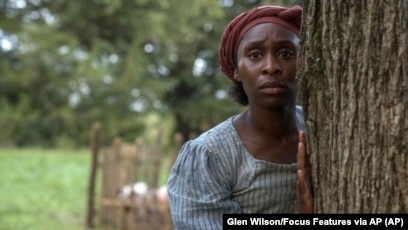
Image result for harriet tubman


In the recent debate about Martin Scorsese's disparaging comments about Marvel movies, I tended to agree with his opinion that those movies aren't really cinema.  In his comments, he compared them to theme parks, which I think is reasonable.  But the seemingly endless stream of superhero movies aren't the only kind of movies in modern Hollywood that are problematic; there's also what are often referred to as Oscar bait films.  Now, while I think the Oscar season (which comes around the last three months of the year) is really the only time when you can see movies made for mature audiences in big multiplexes, the inevitable result can be movies a little too determined to win awards.

An Oscar bait film in one that seems so calculated to please middle brow audiences, with a serious subject matter and plenty of obvious, heavy handed, uplifting moments, that it becomes smug, self satisfied cinema.  Since winning an Oscar can translate to  millions of more dollars at the box office, Oscar bait films  seem to be actually marketing  themselves to the Academy while you're watching them.
The perfect example of such  a film was 2017's THE ZOOKEEPER'S WIFE.  From its historical setting (it's a holocaust drama) to it's too pretty cinematography, to its high minded speeches and brave, noble heroine (the titular character hides Jewish refugees from the Nazis), it's a movie that practically screams "love me!" at the audience, as it brazenly apes the far superior SHINDLER'S LIST.  While disliking such a film is like kicking a puppy, its cloying nature is overwhelming.  It also functions as an example of how Oscar bait can suffer from overreach; despite its obvious ambitions for award glory, the film was mostly critically panned and garnered zero awards.
I bring up the subject of an Oscar bait movie because I just saw the Kasi Lemmon film HARRIET, and it practically drips with such Award desiring fervor.  Unfortunately, it's just not that good of a film.  I say that as an admirer of Lemmon, who's past films like EVE'S BAYOU (1997) and the sadly underrated TALK TO ME (2007) are really good.  But with HARRIET she mostly stumbles. 

The film's biggest flaw is that the character of Harriet Tubman in Lemmon's direction, script (which she co wrote with  Gregory Allen Howard) and Cynthia Erivo's performance never feels like a real person.  Instead, she functions as a symbol of nobility and bravery to such a degree she never comes across as relatable.  There is one brief moment in the opening scene in which she cries a single tear; after that she all stoic determination.  She is constantly making big speeches about freedom, and refusing to listen to the men around her who tell her what she can and cannot do.   She never makes a wrong move and seems superhuman in her ability to lead slaves to freedom.  The result is that we  admire her without really feeling for her as anything more than an important historical figure.  It doesn't help that the real dizzy spells that Tubman suffered from are translated here to actual visions that she uses to avoid capture.  Like I said, super human.
It should be mentioned this is often a problem with biopics, with writers and directors so determined to show their subjects in a positive light that they become blathering depictions of perfect people: from Gary Cooper's god like Lou Gehrig in THE PRIDE OF THE YANKEES way back in 1942 to  Russell Crowe's noble James Braddock in 2005's CINDERELLA MAN, biopics too often just go too far in giving us someone to root for.  It would appear that Lemmon was intimidated by being the first director to ever bring to the screen such an important figure in African American history as Tubman, so she overcompensated on the character's bravery and lost her humanity.  I wish she had taken a page from the far superior 2014 film SELMA, in which director Ava DuVernay was able to show Martin Luther King Jr with complexity, displaying his flaws alongside his strengths.
It also doesn't help that Lemmon fills the movie with action cliches, as Tubman makes one narrow escape after another; while I'm sure the real Tubman's life was filled with danger, I can't quite believe that she came so close to losing her life so often.  Also, Lemmon clearly made this film with a young audience in mind, imagining American history teachers encouraging their students to see the film.  And while this may not seem to be a bad thing, it also means that the film's PG-13 rating limits its ability to accurately display the horrors of slavery.   2013's 12 YEARS A SLAVE, with its far more brutal and realistic depiction of slave life works much better than Harriet's almost sanitized view in my opinion.

So, will Oscar go for the bait of HARRIET?  I suppose it will, considering that it's important lead character is hard to pass over (Cynthia Erivo is a shoo in for a Best Actress nomination, partly because  it's always a bit of a stretch to find five movies that feature women in  lead roles to fill up that category).  And I will say that I while I'm listing all of its flaws, I don't consider it to be a lousy movie, or even a bad one.  I just wish that Lemmon weren't shooting for both Oscar glory and a mainstream audience, and instead had  kept to making a more real film with more realistic characters and story.  Tubman deserved better.

Monday, October 28, 2019

THAT'S NOT CINEMA

"That's not Cinema."


Recently, famed director Martin Scorsese, in an interview promoting his latest film, inflamed the internet by saying about Marvel Movies, “I don’t see them. I tried, you know? But that’s not cinema. Honestly, the closest I can think of them, as well made as they are, with actors doing the best they can under the circumstances, is theme parks. It isn’t the cinema of human beings trying to convey emotional, psychological experiences to another human being.”  When another famed director, Francis Ford Coppola, echoed Scorsese's comments, he added “Martin was kind when he said it’s not cinema. He didn’t say it’s despicable, which I just say it is." ,more uproar and backlash ensued.
Now part of this is an inevitable cycle of any art form, with the older generation (both directors are over seventy) lashing out the new generation in predictable fashion.  And anyone thinking that Scorsese and Coppola are making over the top critical statements should read Frank Capra's 1971 autobiography, in which the creator of films like IT'S A WONDERFUL LIFE  ranted that"practically all the Hollywood film-making of today is stooping to cheap salacious pornography in a crazy bastardization of a great art to compete for the 'patronage' of deviates and masturbators."(!).  In other words, the old have always romantized the art of their formative years and rejected the new.
When Scorsese and Coppola first began making their movies in the late 60's and 70's, most mainstream movies were definitely for adults; the end of the production code in 1968 allowed them and other filmmakers to deal with subject matter that would have been impossible just a few years earlier.  This new artistic freedom resulted in movies that were both grown up and successful (Coppola's THE GODFATHER was not only a critically acclaimed film for adults, it also was the biggest hit  film of 1972). 
But the death knell of the grown up film as big box office came long before the Marvel Movies: when George Lucas's STAR WARS was released in  1977, it showed that if you updated the kiddie serial stories of Buck Rodgers and Flash Gordon while adding top flight special effects, kids would not only flock to see them, they would see them again and again, and buy merchandise on top of that.  While hugely successful films had been around since the very start of the medium, no other movie had dominated the box office for so long, or had built such anticipation for its inevitable sequels.  And really, right then, the concept of a series of films as a franchise was born. 
Which brings us to today's Marvel Movies, which show just how much moviemaking has become about spectacle, with  bigger and bigger effect scenes with one over the top battle after another.  I agree with both Scorsese and Coppola  that these movies are repetitive and formulaic, with individual directors subsuming any personal style they may have into a sameness that matches all the other films in the series; lack of individuality is the point.  Now, film series are nothing new (between 1938 and 1950 a stunning 28 movies based on the comic strip Blondie were released!), but between the Marvel Movies and the DC movies, I can't think of a time when the main stream box office was so captured by one kind of film.  Scorsese compares these kinds of films to theme parks, but think of them more like fast food: mass produced variations on the same thing.  Spiderman is to Bat Man as the Big Mac is to the Whopper. 
Now, I'm not naive, I know that movie making is a business, and that these films make boat loads of money both in the US and overseas.     The logic behind them is obvious, with the modern viewing public having so many choices of watching movies in so many formats, giving audiences thrills on a big screen with good sound is one of the best ways to entice them into the theater.  This is also nothing new: back in the 1950's Hollywood responded to the rivalry of TV partly by making bigger and bigger epic movies in Cinemascope, providing images that no TV screen could equal. 
But the difference this time is that Marvel movies, and other blockbusters like them, are squeezing out smaller, more intimate films from screens, pushing them exclusively into art houses or home viewing, making it harder for them to catch an audience at all.  Disney, which owns the Marvel movies, has gobbled up so many theaters with these films and their other (mostly uninspired) big releases that it's hard for rival studios to get a foothold.
So how will this all play out?  Well, for people who care about movies for grown ups, the Oscars are probably more important than ever, with the prestige of nominations and awards bringing attention to movies that would have no chance of being seen by big audiences otherwise.  Really, without the Oscars, Disney could just buy all the multiplexes and only screen their films and few people could tell the difference.

Saturday, March 23, 2019

GREEN BOOK (2018)


Image result for green book


GREEN BOOK (DIR: PETER FARRELLY) (SCR: NICK VALLELONGA, BRIAN CURRIE AND FARRELLY)

The past year has been a strange one for the Academy of Motion Pictures!  First, back in August, there was an attempt to come up with a new category:  Best Achievement in Popular Film, which was a brazen attempt to expand the audience for the awards broadcast.  When that hit like a lead balloon, the Academy shrugged and shelved the idea for a later date.
Then the nominations came out, and, somehow, surprise hit biopic BOHEMIAN RHAPSODY was among the Best Picture nominations, even though its director, Bryan Singer, was facing multiple charges of sexually exploiting minors.  Also among the Best Picture ranks was the Netflix produced ROMA, which barely qualified due to its brief theatrical run, a decision that angered no less a personage than legendary director Steven Spielberg.  Then comedian Kevin Hart was picked to host the show, but when past homophobic jokes he had made came to light, he was let go and they decided to go without a host.  And then there was an attempt to shorten the broadcast by giving the awards for best editing and cinematography during the commercials, but when some prominent  directors pointed out that cinematography and editing were kinda essential to filmmaking, that idea, too was dropped.
And then there was the eventual Best Picture winner, GREEN BOOK.  Based on the true story of a Southern musical tour by pianist Dr Donald Shirley in the 1960's, it had a  modestly successful box office run in November, and faded into relative obscurity.   But then it was nominated for five Academy  awards.  This was after the family of Dr. Donald Shirley dismissed the film as a "symphony of lies", and after Mahershala Ali, who played Dr. Shirley in the film, publicly apologized for not having met with his surviving family after taking the role.  And of course, despite all of this, it managed to win Best Picture, quickly becoming the most controversial choice since 2004's CRASH.
Is GREEN BOOK really so lousy?  I don't think so, but it's a bland and safe choice for the Academy to make, which may be even worse.  Or sure, it's an amiable enough mismatched buddy comedy, with some funny moments and good chemistry between the stars, but its story is predictable, its feel good attempts at being uplifting are obvious, and it can't help falling into the trap of being yet another movie about race relations in which a noble white person learns a lesson about bigotry by saving a non white person.  The fact that this film would win the top prize from the same Academy that previously awarded far more powerful films about race, like TWELVE YEARS A SLAVE, and MOONLIGHT, feels almost like, well,  a country that goes from electing Barack Obama to Donald Trump.

Image result for green book
Viggo Mortenson & Mahershala Ali

The film began as a labor of love for writer director and actor Nick Vallelonga, who heard stories about the relationship between his father Tony and Dr Shirley and thought it would make a good film.  He interviewed family members that remembered the relationship, and listened to some old interviews with Dr Shirley and then co wrote a script with Brian Currie.  Peter Farrelly, mostly know for gross out comedies like THERE'S SOMETHING ABOUT MARY and DUMB & DUMBER, was picked to direct the film (he also got a screenwriting credit).  A bit surprisingly, non Italian actor Viggo Mortensen was chosen to play the lead role of Tony, while Mahershala Ali was cast as Dr Shirley. The film was coproduced by Dream Works Pictures and Participant Media and released by Universal on a budget of around twenty five million dollars.  Although it did underwhelming box office at first, thanks to its Oscar win, it has grossed about eighty three million dollars in the US.
Set in the 1960's, it's plot tells the story of hefty sized New York night club bouncer Tony the Lip, who, in between his usual jobs, takes an unlikely position as a driver for renowned  African American pianist Dr Donald Shirley as he tours the Southern part of the country.  The two get to know each other and bond as they encounter the harsh, sometimes violent racism of the South at that time, and Dr Shirley introduces Tony to the Green Book, a travel guide for African Americans traveling in the South looking for safe places to stay and eat.  By the end of the film they become friends, with Dr Shirley visiting Tony's family during  Christmas dinner.

Putting  all the controversies about this film aside, it's simply at heart a mismatched interracial buddy comedy with  the usual racial stereotypes flipped (it's Dr Shirley who teaches Tony about proper diction, while Tony teaches him about Aretha Franklin and Little Richard).  Oh sure, there are some tense moments when racial tensions in the South could lead to possible violence for our heroes, but there's never any sense of real peril.  We know that they'll be fine by the movie's ending, leaving even the ugliest scenes of possible danger essentially bloodless.  It really is surprising to me that this film not only won Best Picture, but also Best Original Screenplay, considering it's predictable choices and easy formula of putting the characters in trouble and getting them out, and that it ends with that most hackneyed  of cliches, the big Christmas dinner.  Hardly an original idea! Also, a subplot about Tony considering a job with some local gangsters goes nowhere and plays up to the notion that you can't make a film about Italian Americans without some kind of reference to the mob.  And then there's the infamous fried chicken scene, in which Tony buys some chicken in Kentucky and practically forces Dr Shirley to eat some, even though he's never had it before; it really is ridiculous to believe that  Dr Shirley not only had never tried fried chicken before, but also has to be taught how to eat it!  The fact that he holds the chicken like it's some kind of foreign object adds to the absurdity.  (And it also feels like a commercial for the Kentucky Fried Chicken franchise, with the logo prominently displayed).
Image result for green book

And if the script is underwhelming, so is Farelly's direction.  Oh sure, he and cinematographer Sean Porter give the movie a pleasant enough glow (standard issue for Hollywood period pieces), and there's some nice scenery, but there are few if any memorable images or striking camera movements.  It's a pretty workmanlike job.  Not too surprising given that his previous film was the sequel to DUMB AND DUMBER!
I've already said that I enjoy the chemistry between the two leads, and that really is the film's saving grace: Viggo Mortensen gained forty pounds to play Tony, and while at times he seems to be over doing the Italian stereotypes, he does express the more tender side of his character and makes him feel  real.  Mahershala Ali won a Best Supporting Actor award for his portrayal of Dr Shirley, and he is the best thing in the film.  From his clipped, perfect elocution that turns into dry sarcasm when he ridicules Tony, to his sad, withdrawn loneliness and coiled anger when confronted with racism.  And I won't deny that, other than the aforementioned chicken scene, I really do enjoy all the moments of Ali and Mortensen playing off each other, and I particularly like the way that Dr Shirley helps Tony write letters back home to his wife Delores.  And Linda Cardellini as Dolores is also good, bringing a nice warmth and likability to every moment she's in. 
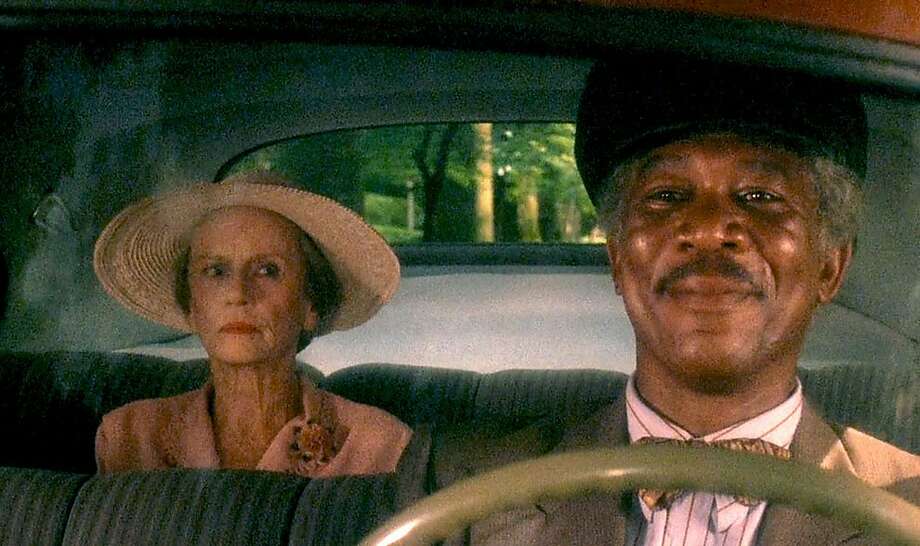
And finally, it must be mentioned just how much this movie resembles 1989's Best Picture winner DRIVING MS DAISY, which was also a period piece about a mismatched racial relationship that involved lots of driving.   And while I think GREEN BOOK is marginally better than that film, it does seem kind of pathetic that the Academy would pick such similar films, with the implication that somehow we've progressed because now it's the white person driving around the black person!

Image result for driving miss daisy
Look Familiar?
SO DID THE ACADEMY GET IT RIGHT?

I think my misgivings about this film are pretty obvious.  My personal favorite film of the year was Barry Jenkins's gorgeous James Baldwin adaptation IF BEALE STREET COULD TALK, which,  sadly, was not even nominated.  But I also preferred Spike Lee's BLACK KKKLANSMAN, Alfonso Cuarón's ROMA, and Bradley Cooper's A STAR IS BORN.

Tuesday, January 22, 2019

THE 2019 NOMINATIONS: FIRST IMPRESSIONS


Image result for the academy awards 2019

The 2019 nominations Academy Award nominations have just been announced, and my first impression is that the Best Picture race is a diverse mix, from big budget crowd pleasers like BLACK PANTHER (the first super hero movie to garner a Best Picture nomination)  and A STAR IS BORN, to lesser known films like THE FAVORITE and ROMA.  While I don't dislike any films in the list, I'm quite disappointed at the omission of Barry Jenkins's wonderful IF BEALE STREET COULD TALK, which is up for Best Adapted Screenplay (Jenkins), Best Original Soundtrack (Nicholas Britell) and Best Supporting Actress (Regina King).  I suppose the Academy felt that Jenkins already had his moment when his equally great MOONLIGHT won Best Picture two years ago, but I prefer IF BEALE STREET COULD TALK to every other film on the list.  I'm also disappointed that Marielle Heller's wildly entertaining CAN YOU EVER FORGIVE ME? isn't up.  Plus I think Wes Anderson's marvelous animated film ISLE OF DOGS was good enough to win a Best Picture nomination along with its inevitable nomination for Best Animated Film.   And while it came out early in the year, and was a low budget film, I wish that Bo Burham's EIGHTH GRADE were up for something, just for its painfully realistic view of adolescence!
The Academy also embraced controversy in some of its Best Picture choices, with both Adam McKay's Dick Cheney skewering (and highly divisive)  VICE  and Spike Lee's Trump bashing BLACK KKKLANSMAN both defiantly nominated in the face of a conservative president.  Controversial for another reason is Peter Farrelly's GREEN BOOK, a pleasant if predictable movie that, while based on a true story, has had its veracity attacked by family members of the real life character Dr. Don Shirley played by Mahershala Ali in the film.   And then there's the surprise hit BOHEMIAN RHAPSODY, which has somehow wound up on the list despite the fact that director Bryan Singer has been accused of multiple sexual assault charges, and also reportedly had to be replaced during filming.  This will probably prevent the film from winning.

Even though I'm disappointed about the IF BEALE STREET COULD TALK snub, I'm still glad to see Yorgos Lanthimos's oddball costume drama THE FAVORITE up, which I thought would be too weird for the Academy to honor.   But I can't imagine that it will win.  Which brings us to what is the most likely winner:  Bradley Cooper's  A STAR IS BORN (which has eight nominations altogether). It looks like a strong contender partly because of Lady Gaga's surprisingly strong dramatic performance, and partly because her costar  Cooper also did a good job in his directoral debut.  Add to that the fact that the film's tragic plot is one that has resonated for decades (this is the fourth official version of this story!) and that the film is a popular hit with a strong soundtrack, and I think its chances are good to win the big award.  But then I thought the same thing about LA LA LAND two years ago, so what do I know?

Thursday, August 9, 2018

ACHIEVEMENTS IN POPULAR FILM? SAY WHAT?


Last Wednesday, the Motion Picture Academy released a press briefing concerning some upcoming changes in their organization: first, Oscar telecasts would be held to a three hour time limit, with some awards being given during commercials with a highlight reel of those awards to be shown later in the broadcast.  This makes perfect sense: ratings for the show have been in decline for years, with many viewers complaining about the show's often four plus hour length.  And let's face it, many of the awards are given to people who worked on films that the vast majority of the viewing audience have never seen or heard of (like Best Live Action Short Subject), or for technical things that are difficult to understand (there are two separate awards for sound editing and sound mixing!).    While the people who worked on those films should win awards, cutting down the broadcast time given to their wins  should make the show more entertaining and accessible.
The second part of the press release is far more interesting, and potentially controversial.  A new award for “outstanding achievement in popular film” has now been announced, with details to be forthcoming. It would appear that this is an attempt to broaden the show's audience by giving a major award to a block buster.  In other words, the Academy is  trying to make a people's choice award, one that reflects the tastes of the main stream movie going public more than the supposedly elevated tastes of the Academy members.  This is not the first time that the Academy has made this kind of move: in 2009, when the box office hit THE DARK KNIGHT did not get nominated for Best Picture, the Academy expanded its Best Picture Nominees from five films to ten, making room for more hit movies.  This led to films like 2015's MAD MAX:FURY ROAD getting a Best Picture nomination, something that probably never would have happened if the nominees had been held to five.  Apparently, even that move wasn't seen as enough to placate the rabid fan boys who flock to the latest special effect explosion movies, and who feel disrespected by the Oscars.
But is this just pandering?  By implying that big money making movies are somehow in a different category than the ones that are usually nominated, they almost seem to be lowering popular films, saying that they are only worthy of winning in  a separate  category (although a film could be nominated for both an Outstanding Achievement in Popular Film award and Best Picture, like when Toy Story 3 was nominated for Best Animated Film and Best Picture).
Once upon a time, popular films were almost always at least nominated for Best Picture, but in recent years, mainstream Hollywood movies have mostly gotten louder and dumber.   Playing to the lowest common denominator, giving that all important young male demographic just what they want, while keeping stories simple to appeal to the ever growing world wide audience, has become Hollywood's stock in trade for some time now, and, to be fair, they have reaped enormous financial rewards from doing that.  But should that cynical, sequel and reboot driven style that turns the cinematic art form into the equivalent of Big Macs, really be given an award for artistic achievement?  Aren't the technical awards for things like special effects, editing and production design enough?  (Really, when you get down to it, it's those technical people behind the scenes who create those special effects that do the real work for so many blockbuster movies, as the screen writers cough up cliches and the actors stand in front of green screens).  
As an avid moviegoer who mostly avoids mainstream Hollywood films until the "Oscar bait" movies start getting released late in the year, I don't like the idea of this new award; let the popular films make money and the "good" ones win awards.  At the same time, I understand why the Academy chose to do this; generally speaking, when more popular movies are nominated, more people watch; they can point to high ratings for the  years when TITANIC,  THE LORD OF THE RINGS: THE RETURN OF THE KING and AVATAR were nominated.  But it's been nine years since that AVATAR broadcast, and the viewing habits of the American public has changed.   This new award may do little to end what is a growing trend for most TV viewers, who prefer streaming formats that allow for more flexibility in their viewing habits.  (The fact that the Super Bowl and the Grammys have also seen their ratings drop in recent years reflects this.)   Sure, there's something exciting in watching events unfold live, but a lot of people would just rather watch the best parts on You Tube afterwards so they don't have to wade through the endless commercials and dull parts.  Adding a new award will probably not buck this trend, and in the long run, I think it cheapens the Academy by forcing it to reward things like super hero movies and inane comedies. 

Tuesday, June 12, 2018

A DISTURBING TREND

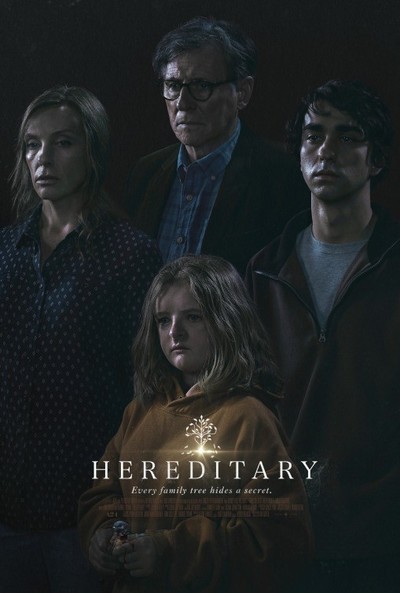
Image result for hereditary

(There are spoilers for the movie HEREDITARY here, you've been warned)


The low budget horror film HEREDITARY, written and directed by Ari Aster opened just last weekend and got a decidedly mixed reception: while critics highly praised the film (it rates an impressive 92% on the Tomato meter) audiences surveyed on the way out gave it a lowly D+ grade.  As someone who is sick of super hero movies and loves independent movies, whenever critics and the general public disagree, I'm usually with the critics, but not this time!  Putting it bluntly, I actively hated this film and almost walked out on it in the first half hour.  Now understand, I not someone who can't stand horror movies,  (I loved GET OUT from last year, and THE BABADOOK from 2014), no,  my problem with HEREDITARY stems  from one of the most difficult things to portray on a movie screen: violence against children.
Stories for children, have, of course, often featured children in dangerous situations in which they are threatened by evil adults, from THE WIZARD OF OZ to HARRY POTTER, but these stories have inevitable happy endings and are light hearted in tone despite the moments of danger.  And more serious, realistic examples of children being threatened can work when handled in the right way, as in the powerful scene in SCHINDLER'S LIST in which children hide in out houses to avoid being sent to a death camp.  No, what bothers me are recent  films like HEREDITARY that are made for adults and that consciously seem to be pushing the audience's tolerance level by amping up the violence against children.  Last year,  Darren Aronofsky's fever dream film MOTHER (which I had some admiration for) ended with a baby being eaten.  Another film, THE KILLING OF A SACRED DEER, (which I also hated), showed two young children slowly wasting away from a hideous curse that eventually makes blood pour from their eyes.  
That brings us to HEREDITARY, in which, in a harrowing scene, a 13 year old girl suffering from an allergic reaction, sticks her head out of a careening car window and is literally decapitated.  The moment itself is over briefly, but in the aftermath, director Aster chooses to show a long, realistic, lingering shot of her severed head on the road, being eaten by ants. Why did he choose to do this?   That shot has no purpose in the plot, making its repulsiveness completely unnecessary. It's a terrible choice, in my opinion, and even though it lasts a few short seconds, it  casts a pall over the rest of the film. (In case you were wondering, this was the moment that almost made me walk out). 
Any time a director decides to put an image like that in my head, the movie needs to justify it, and this film falls far short of that in my opinion: although it starts out like a serious family drama, HEREDITARY eventually degenerates into a standard issue ghost/possession story with the usual scenes of people having crazy nightmares, stumbling into dark spooky rooms and choosing to do things that defy logic.  Sure, there are some good performances and well shot scenes, but nothing that compensates for that horrific image.  
There's been a lot of praise for the performance of Toni Collette as the long suffering mom in the film, and while I think she is very good, digging into big emotional moments with a ragged intensity,  it's a better performance than the film deserves.  In fact, the raw emotion she  brings to the dramatic parts of the film wind up seeming silly when contrasted with her character  doing things like floating in the air and speaking in a possessed voice.  In a serious dramatic film, her realistic performance would work perfectly, but here it just winds up seeming ridiculous.
I've already mentioned that I loved Jennifer Kent's THE BABADOOK, which was also about malevolent spirits and possession, and also had a child put in danger.  But in that film, the endangered child was  central to the plot, and Kent handled it effectively and tastefully.  And as for the aforementioned baby eating scene in Aranofsky's MOTHER,  that film had become so completely surreal and metaphorical at that point in the film, that the baby eating seemed like an inevitable part of the story. You see, it's not the threatening of children that I necessary object to, it's the context in which it is handled in the film, and I think Aster handled it terribly here.  There really is no context for me that justifies seeing a young girl's severed head being eaten by ants!


Thursday, April 5, 2018

THE SHAPE OF WATER (2017)


When Guillermo del Toro's THE SHAPE OF WATER won the Best Picture award for 2017, it was not a big surprise; del Toro's movie had been nominated for a whopping 13 awards, and had already won 3 (for del Toro's direction, its production design and its score).  On the other hand, there had never been a science fiction film that won Best Picture before (somewhat amazingly, Stanley Kubrick's 1968 film 2001:A SPACE ODYSSEY was not even nominated for Best Picture!), and there was quite a bit of buzz about some of the other films nominated, like 3 BILLBOARDS OUTSIDE EBBING MISSOURI and GET OUT.  Still, the Academy resisted having another upset like they had had the year before when MOONLIGHT defeated LA LA LAND, and they awarded the expected winner this time.  Personally, while I find del Toro's film undeniably lovely to look out and well acted, I think it falls short of greatness, especially in its predictable screenplay.


In 1954's cult monster film classic THE CREATURE FROM THE BLACK LAGOON, there's a striking moment when the film's lovely leading lady goes for a swim in the Amazon waters, and the film's titular creature (also known as the gill man) starts to swim below her.  But instead of attacking her, it follows her motions beneath her, without her knowing, copying her, clearly carrying out a sort of mating dance.  Up until then, the creature had only been shown as a fearsome beast, but in that moment, its awkward desire made it seem almost likable.  For a lot of adolescent boys just discovering girls but feeling too, well, monstrous, to act on their desires, it hit home.  One of those adolescent boys was Guillermo del Toro, who was a horror movie obsessed, monster loving kid, that would go on turn those childhood obsessions into movies.  Beginning with his first feature film, 1993's interesting vampire reimagining CRONOS to THE SHAPE OF WATER, every film he's directed has some kind of monster or ghost running through it.  He says he first got the idea for THE SHAPE OF WATER while talking to writer David Kraus in 2011, and he also considered directing a straight up remake of THE CREATURE FROM THE BLACK LAGOON for Universal (allegedly, the studio passed on his pitch for the film when he wanted to end it with the gill man and the female lead ending up together!).  Del Toro eventually wrote the film as a love story, and immediately wanted English actress Sally Hawkins (who had been so likable in 2008's Mike Leigh film HAPPY GO LUCKY) to play the lead.  Octavia Spencer, Micheal Shannon and Richard Jenkins, excellent actors all, were cast in supporting roles.  Del Toro finished the script with help from TV writer Vanessa Taylor and shot the film for a relatively low twenty million dollar budget in 2016.  Powered by word of mouth as much as Oscar nominations, the film would eventually gross around one hundred and ninety million dollars, making it one of the most financially successful Best Picture winners in recent years.

Set in Baltimore in 1962, it tells the story of Eliza (Hawkins), a mute, orphaned cleaning woman, who lives in a modest apartment building in which she has befriended her lonely, gay, recovering alcoholic neighbor Giles (Jenkins).  At work, she and her friend  Zelda (Spencer) are cleaning out a government lab in which a scaled, man sized fish creature has been housed by security manager Richard (Shannon).  Eliza finds herself drawn to the creature, despite the fact that it has bitten off two of Richard's fingers.  She starts to feed it, play music for it, and teach it sign language.  When she discovers that Richard plans to kill and dissect the creature, she sneaks him into her apartment with the reluctant help of Zelda and Giles.  Slowly, she finds herself falling in love with the creature, and they began to have an unusual sex life. Giles also finds himself drawn to the creature and he discovers that the creature has magical healing powers. Meanwhile, Richard, enraged at the creature's disappearance, eventually tracks him down on the same night that Eliza plans to release it into the sea.  Before she can, Richard shoots both her and the creature, but the creature resurrects himself and kills Richard.  Then he carries Eliza off into the water, both healing her and giving her the ability to breath under water.  The two of them swim off together.
From it's lovely opening tracking shot that glides through a water flooded apartment and ends on Eliza, reclining in the water like sleeping beauty, while Jenkins's narrator character on the soundtrack refers to her as "a princess without a voice", de Toro establishes that this story is a modern, adult fairy tale, and throughout the film cinematographer Dan Lausten and production designer Paul D. Austerberry give the film a surreal green tinged look (even the food and the cars are green) while still realistically recreating Baltimore in the 1960's.  And that fairy tale quality is extended in both Alexandre Desplat's excellent score and the use of old jazz tunes on the soundtrack, which contrast with the odd squacking noises that the creature makes.  (Pat Friday singing "I know why" has never sounded so haunting!)  I love the slightly crazy scene in which Eliza imagines herself singing in an old black and white Astaire-Rogers style musical with the creature making an unlikely dance partner.  Since those movies were themselves often like fairy tales, it doesn't seem out of place and keeps with the overall tone of the film while giving de Toro a chance to put in an unexpected homage to old Hollywood.


However, playing out like a fairy tale makes the plot  too simple at times for my taste; this is a film where I could guess almost every beat of the story from just having seen the preview beforehand.  From Eliza bonding with the creature and sneaking it  out, to the killing of the evil Richard at the end before the inevitable happy ending, there are no plot twists in this film that could be called surprising (although I must admit that I did not foresee an actual Communist spy being part of the story, but I also found that subplot pointless).  Along with being a like a fairy tale, the movie also resembles a number of films that came out back in the 1980's (like ET, SPLASH and STAR MAN), in which innocent alien or magical creatures were threatened with horrible government experiments; at times I couldn't help but feel that I've seen this story before, right down to the creature's magic healing powers and resurrection abilities that resemble ET's.  There are also questions of plausibility in the story, with a human sized fish creature somehow getting around a crowded city without anyone noticing (he even takes a trip to a movie theater!).  Even fairy tales have to make sense.  And I would have like to know a little bit more about the creature, especially regarding whether there are any more like it out there. 
Still, this film is certainly never boring to look out, and that's especially true of the magnificent job done by the effect and makeup crew on the creature, turning the old gill man from THE CREATURE FROM THE BLACK LAGOON into a modern marvel.  Del Toro has said designing him was one of the most difficult things he's worked on in all of his years of film making, and it shows.  It's a monster that can be both frightening and beautiful, threatening or pathetic.  And clearly they learned one of the important lessons of ET: audiences will care for an alien creature as long as it has big, soulful eyes.  Also, credit must be given to Doug Jones, the man in the suit, who has been working with de Toro since 1997's MIMIC; his years of playing monsters and training as a mime  pay off in the way that the creature's thoughts are often conveyed with a simple gesture or turn of the head. For a monster performance, it's often subtle.

As for the other performances, most of them are very good.  In Eliza, Giles and Zelda, we get a trio of lovable misfits, the kind of people who weren't always welcome in the era of the early 60's as the film often makes clear.  Sally Hawkins as Eliza is extremely endearing; with her simple beauty and broad, expressive eyes, she doesn't need to talk to carry the film; from the early moment when we see her kindly bringing breakfast to her neighbor Giles, to the way she taps her feet on the floor as she walks down the hall, mimicking the tap dance routine she just saw on TV, we're completely on her side.  One intriguing question arises concerning her character:  we hear that she was found alone and abandoned in the water as a baby, and she has a scar on her neck that resembles a fish's gill.  Therefore, one has to wonder,  is she herself half fish creature and half human?  That would explain why she's almost immediately drawn to the creature, even after she knows that it bit a man's fingers off.  The movie never says she is, but it's an interesting idea  Richard Jenkins as Giles is also very good as an unhappily closeted gay man;  I love the  wistful nature he has when he finds himself confessing to the creature that he feels alone too, and he's also often funny (at one point he asks of the creature "Now, is he a god? I dunno if he's a god. I mean he ate a cat, so I don't know!").  Octavia Spencer as Zelda is fine, but she really doesn't have a lot to do in the standard role of the African American faithful friend to the main character type.  Still, I do enjoy her reaction in the scene in which Eliza mimes out exactly how she and creature can have sex!
And then there's Micheal Shannon as the vile Richard; with his tall frame and harsh features, Shannon is usually typecast as a villain, so his casting here is no surprise.  But the script gives him no dimension whatsoever, he's just a sneering, leering horrid person in every scene; even when he's at home with his family or buying a new car he seems creepy.  Even worse,  I find his one note performance more and more grating as the film goes on and he gets more and more despicable. (There's even a scene involving him torturing someone for information; it's ugly and unnecessary, and I wish Hollywood would get over the need for such scenes in movies and TV shows)  I understand that fairy tales always have wicked characters, but it wouldn't have hurt to have given him a few moments of sympathy.  While I have enjoyed Shannon in other roles over the years, the best thing that I can say about this one is that he's not quite on screen enough to ruin the film, but he definitely damages it, in my opinion.

SO DID THE ACADEMY GET IT RIGHT?

I think it's clear that I admire this film without loving it (it's not even my favorite Del Toro film, I enjoyed 1996's PAN'S LABYRINTH more).  I think that nominated films like Jordan Peele's GET OUT and  Martin McDonagh's THREE BILLBOARDS OUTSIDE EBBING MISSOURI  were better, and films that weren't nominated like Dee Rees's excellent post war drama MUDBOUND,  Craig Gillespie's deliriously entertaining I TONYA and Lee Unkrich's and Adrian Molina's delightful COCO were also superior.  Still, De Toro is a likable Hollywood personality who's been making (mostly) good films for 20 years, so I'm not exactly upset about the Academy's choice.